Showing posts with label Bimini sharks. Show all posts

Monday, February 25, 2013

Great Hammerhead Shark Diving Protocols: Bimini, The Bahamas


Great Hammerheads have created quite a stir in Bimini this year and it is important that some of the ridiculous shark riding shenanigans that happen in other locations not be brought to these sites. Please respect these animals and help protect them. Scalloped, smooth and Great Hammerheads are all listed in proposals for inclusion at this year at the CITES convention happening in Bangkok, Thailand in March.

Below are two letters sent to various members of the shark diving community is hopes that they will respect not only these animals, but the island they are located near.


Greetings from Bimini,

With the enormous amount of interest that the Great Hammerheads are generating around Bimini this year, I wanted to attempt to to set the record straight regarding this incredible situation happening around the island. I don’t mean this message to be confrontational or self-righteous, rather I’m hoping it can be informative and maybe even helpful.

As anyone familiar with Bimini has probably already assumed, the researchers at the Bimini Biological Field Station (SharkLab) are responsible for discovering and determining the regularity and reliability of diving with these big hammerheads. The SharkLab staff began diving with these sharks on a regular basis back in 2003, and since then have utilized various ‘hammerhead sites’ around the island for numerous research projects and related expeditions. Obviously the hammerheads were around long before that, and can be found in more than one location around Bimini, but all of the visiting “shark diving” boats are utilizing sites and situations developed by local SharkLab researchers.

Due to the rarity of interacting with these sharks, and the incredible potential for research opportunities on an IUCN Redlisted species, local guides and tour operators have resisted the exploitation of this yearly “hammerhead season” around Bimini. It was decided that research should be the priority surrounding this event, rather than commercialization.

For better or for worse, and against the wishes of many of those involved with developing this phenomenon, that all changed in 2012. An off-island SCUBA operator caught wind of the situation around Bimini and convinced a former SharkLabber to show him the basics of how-and-when-and-where to attract these incredible sharks. A year later, after the wide publicization of that promised “one time only” expedition, we now have at least 10 off-island dive operations converging on Bimini to experience this event.

Anyone coming to dive with these sharks around Bimini needs to accept that there is considerable amount of responsibility that comes with your expedition. You hold in your power the ability to do an enormous amount of damage to the reputation of this island and to this endangered species of shark, and hopefully you do not take this lightly. I’m a firm believer that under the right circumstances and with the proper insight, any species of shark can be safely encountered in the wild. That being said, I would imagine there is little to no agreement on exactly what those circumstances and insights are. But if you think its acceptable to put yourself, or your guests, or the sharks, at any elevated risk for the sake of photos, videos, or bragging-rights, you are wrong. If you or your guests get hurt around Bimini because of your own recklessness, the tourism industry on this island could face irreparable damage, as could the public perception of these sharks, and we want people to take that very, very seriously.

Additionally, I’d like to suggest that if you are benefitting in anyway from your expedition to Bimini, that you should make a point to patronize some of the local businesses while you’re here so that the island benefits from your trip as well. Go to the local bars at night, take some meals at local restaurants, take a tour of the SharkLab, or whatever else you think is fitting. If you’re looking for a marina to tie up in, please consider Bimini Sands Resort & Marina, the Bimini Big Game Club, Seacrest Hotel & Marina, Bimini Blue Water Resort, Weech’s Bimini Docks, or Brown’s Marina. All of these marinas have supported local conservation measures around the island, and should be rewarded for doing so.

If, for some reason, you’re not willing to spend money on the island, then contribute in some other way. Help maintain the moorings at the local dive sites, do a beach-clean-up with your crew and guests, join and help publicize the Bimini Marine Protected Area Campaign, or something else worthwhile.

We don’t need, or want, this amazing event around Bimini to turn into a circus of competing egos. There is no need to further misrepresent the history of this situation, nor is there any reason that the operators involved can’t coordinate and cooperate in a professional manner, all without interfering with ongoing research.

If you are seeing this message, The Bahamas Ministry of Tourism has been made aware of your visit, as have local law enforcement officials. We expect your cooperation in ensuring the safety of every person and animal involved in these expeditions, and also expect your help in maintaining a professional atmosphere around the island with proper diving etiquette employed.

As Bimini emerges as the regional “Hammerhead Headquarters,” we all need to do what is necessary to make sure your excursion not only benefits you and your guests, but also the sharks and the island of Bimini.

Thank you for your time, and please feel free to contact me if you have any further questions or comments.

Regards,
Grant Johnson

Vice-Chairman, Bimini Tourism Advisory Board (BTAB)
Activities Director, Bimini Sands Resort & Marina (2007 – Present)
Former Manager, Bimini Biological Field Station –SharkLab (2001-2007)


Sharklab:
Dear All, 


For the past 23 years the Bimini Biological Field Station, "Sharklab" has been documenting the occurrence of Great hammerhead, S. mokarran sharks around the Bimini Islands. In 2003 we located an area, "The Grate" where these animals could be baited in for educational experiences and to facilitate tagging and genetic sampling. Last year this site was used for the first time commercially as a diving experience for tourists, and in the past two months a number of tourism vessels have begun to explore its potential. Whilst we are delighted to see people from around the globe interact with, and observe up close one of the world’s most charismatic predators we are keen to ensure that such experiences are conducted in a safe and responsible manner. This site is an established research location for Great hammerheads and has already provided some interesting findings. Attached is a document that includes some of these preliminary results, as well as, sections detailing our current understanding of Great hammerhead biology and conservation, planned methods and the significance of our research. Great hammerheads are endangered, declining in numbers and data deficient. To our knowledge there are few places around the globe where it is possible to research free-ranging individuals in close proximity to shore. Bimini therefore gives us a unique opportunity to understand more about these elusive predators and we hope that with this email and detailed description of our project we can open up lines of communication between ourselves and dive operators. We are eager to collate as much data as possible on these enigmatic sharks and would welcome information on the number of tagged / untagged individuals observed, as well as, environmental records of the conditions, such as water temperature during such dives. It would also be particularly useful to know when and for how long operators are using the site so that we can coordinate with our research and educational trips. If you are interested to take such information please contact me for a data template. 

I would greatly appreciate your time in replying to this email with any thoughts or comments.

Thank you for your time and best regards,

Dr. Tristan Guttridge
Director Bimini Biological Field Station
South Bimini, The Bahamas

Thursday, October 18, 2012

Sharks Bring The Community Together in Bimini


On Wednesday October 17, students from the Louise McDonald High School on North Bimini got the chance to get up close and personal with some pretty “fin,” tastic animals.
Bimini is home to the world-renowned Bimini Biological Field Station (Sharklab), founded by Dr. Samuel Gruber in 1990, and a diverse population of sharks in the waters that surround these, ”Islands in the Stream.” Just over a year ago a 243,244 square mile Shark Sanctuary was established in the Bahamas and it is crucial for this next generation to know what is in their own backyard and why it is worth protecting.

Grant Johnston and Katie Grudecki, Co-Directors of the Bimini Sands Activity Center, joined the staff and volunteers at the Sharklab to create a day of science and hands on experience for the local students. Activities included a presentation about the indigenous Bimini boa and ocean critters, snorkeling and a mock tagging workup of a juvenile shark.

Although sharks were the focal point of the day, there was also an emphasis on terrestrial and marine conservation issues. Katie and Grant spent time introducing the students to the Bimini boa, a rare snake found only on the two islands of Bimini. Habitat destruction that impacts the ocean has also affected these animals. It is important to understand the system as a whole and realize that everything is connected.

Lab managers Lindsey Biermann, Michael Timm and TJ Ostendorf took groups by boat out to the Sharklab pens were they got to snorkel with Southern stingrays, juvenile lemon sharks and juvenile nurse sharks. The pens are used for research and provide the perfect space for kids to get to know sharks. This was definitely the most exciting activity with lots of laughter echoing over the water.


Sharklab director Dr. Tristan Guttridge and lab manager Jill Brooks explained the life history traits of sharks and demonstrated shark tagging and workup. Students were able to learn about sharks and some of the ways they are studied. This was a great forum for questions and there was no shortage of excitement at this station, especially with the opportunity to hold a juvenile nurse shark. . The kids were a bit timid at first, but their massive smiles overshadowed any fears or doubts they had. Having a connection with something that small, and dare I say, “cute,” is a great way to break the stereotypes that surround sharks.


"Everyone at the shark lab was thrilled to be able teach local school students about our research and showcase Bimini's marine and terrestrial fauna and flora. The students were enthusiastic, engaging and fun to work with making it a rewarding experience for the shark lab team! We hope to have many more open days in the future,” Dr Guttridge had to say about the day.

For many of the students, this was their first opportunity to see a shark up close with the highlight for most being the chance to actually hold a shark. Sharks are vital for the islands of the Bahamas and it is necessary for children and the community to understand the importance of their place in the ocean ecosystem. It is amazing thing to see local businesses, the Sharklab and the community come together on behalf of sharks, the oceans and the island.
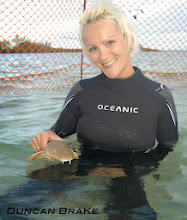


"Bimini Sands is always excited to participate in community projects, and it was great working with the BBFS team on this one. The students were so enthusiastic and eager to learn which made the day quite rewarding for all of us involved, ” Katie Grudecki said as she described the day.

I was fortunate enough to get to photograph one of the stations and the smiles on the students' faces were amazing. I love that energy and excitement that kids cannot possibly hide. They laughed, giggled and asked some great questions as Tristan and Jill showed them the baby sharks. Having the small sharks available for these kind of events is so important. Seeing a small shark that is cute can crush a lot of the man-eater and monster stereotypes that surround sharks. Really an awesome day and I can't wait for the next one!


The Bimini Biological Field Station will be offering more open days to the community in the future and if you are visiting the island make sure you book your lab tour! For more information about the Sharklab and the work that is being done there, check out. Sharklab

Monday, August 27, 2012

Bimini Blast: Our STAYcation Part II


Duncan arrived back from his shoot in the early hours of the morning along with our friend Glenn, who had been on the shoot with him. We had rented a boat for the day, so everyone was rushing around to get ready and head out the door. Scuba tanks, bait, dive gear, lunch of champions ( peanut butter and jelly) and cameras filled every empty space on the boat. Walt arrived and we launched into our adventure.

Our first stop was Triangle to dive with Caribbean reef sharks. The sharks here have become familiar with divers over the course of 20 years of research and filming that has occurred at the site. We anchored the boat and began baiting. We are spoiled at this location and usually have sharks around us before the boat is even set. On this day nothing seemed to be happening,not a shark in site. Dunk and I looked at each other, as we had only encountered this one other time. Three years ago we were skunked on the same site because block rigs had been dropped in the area and their target was sharks. They were created with car batteries as anchors and had metal wire with large rusty hooks. No doubt a shark had struggled or been captured on one, causing the other sharks to disappear. Dead shark is a repellent for many shark species and companies are working on synthesizing dead shark as a repellent to keep sharks away from longlines, beaches and other areas that might be harmful to them.

We waited about 15 minutes and I made the call to move on with our day. There was no sign of life and we knew there would not be. We got reports from two other groups that attempted a snorkel on the site and they got skunked as well. It was later confirmed that a vessel had been shark fishing the previous day. Nothing like some asshole
(pardon my language, but this angers me to no end) tourists to go “shoot fish in a barrel.” Real fisherman huh? I was disappointed that our camera loaded friends didn't get the experience, but beyond disappointed and angry at the fact that people cannot leave sharks alone! The locals respect this site and understand its importance, but tourists don’t care about the damage they leave behind because it is not their backyard. I am not Bahamian, but I live in Bimini and this is my backyard!

We headed to another site to find some nurse sharks and were happily greeted by a slumber party of six nurses wedged under a coral head. They cruised around and sniffed our bait. This is one of my favorite spots, although only ten feet deep, to visit and hangout. The current was ripping, which made the dive challenging, especially in shallow water, but everyone got some nurse shark love.


We had such a blast hanging with the rays earlier in the week that we headed
back to Honeymoon Harbor to finish off our day. Glenn had never been and getting goosed by a stingray is really a must when visiting Bimini. We plopped down our delicious bait and were immediately mugged by 10-12 stingrays. They have no manners and do not mind giving you a goose or a bit of chew. If they get your toes it feels really weird. Glenn was like a kid on Christmas, the typical reaction, as rays swarmed him and traded lots of Bimini love for a free snack. There were several families picnicking on the beach and they came to check out what were doing. One mentioned she heard stingrays were dangerous, but we quickly coaxed her into the water and watched as she squealed with delight as a massive ray sat on her lap.


Before long we had a few other guests join us, as two large nurse sharks and two good sized Caribbean reef sharks came in to check out the commotion. Six kids, balanced precariously on a paddleboard, shouted, “shark,” and immediately headed off to get a better look. I love it when people yell, “ shark,” and move in for a closer look rather than running for the hills. The kids shouted and laughed as the shark tried to avoid the ruckus they were causing. “ Cool, “ and, “ awesome,” were shouted at least a dozen times. We basked in the glow of Mother Nature’s classroom and continued to talk to spectators about the rays and sharks. We definitely changed a few minds which soothed the wounds inflicted earlier by the lack of sharks at Triangle.

The conditions were perfect as stingrays zipped across the white sand bottom in gin clear water. I am pretty sure Denny was actually drooling as he fired shot after shot on his camera. Two and a half hours were absorbed by sharks and rays and we soaked up the final moments. Dunk and I dropped everyone off for a snorkel lap around the concrete ship, as it really is another must for the Bimini visitor. We were back before sunset and ready to celebrate the day with a cocktail. I blended some frozen deliciousness and we enjoyed some local fare.


Sadly Shari and Walt departed early the next day, but we scurried to get on the water before Dennis had to catch his afternoon flight. The tide was right for us to make a run through Smuggler’s pass in the mangroves. This aptly named route was utilized by rum and drug runners in the past and is one of the most amazing places on the planet. We zipped through the channel, not as wide as the boat in some places, and relished in the complete rawness of the mangrove forest. The occasional airplane passing overhead was the only reminder that were were not a million miles from civilization. Very few people on the planet have visited this region and it really is a hidden treasure. Schools of juvenile snapper darted a head of us as juvenile green turtles raced each other across our bow. A large Southern stingray cruised a long and a juvenile lemon sharks took cover in the thickness of the mangrove root maze.


The channel finally opened and we were deposited in the lagoon that separates the north and south islands. In the distance the development has littered the landscape with piles of sand and heavy construction equipment. Boggles my mind that a treasure like this channel exists and people are blind to it, having no empathy towards the vital roll it plays in the life of the island. A role that not even the al mightiest of dollars can rival.


We anchored the boat and swam. We floated, laughed and wallowed in what we had just experienced. Such a breathtaking place that never ceases to amaze me. We said goodbye to the mangroves and pulled up at Stuart’s Conch stand to toast the day with a cold libation. Front row parking on the beach and cold Kaliks in our hand immediately. We had become frequent guests in the recent days and I have to say it never got old. There is nothing bad about sitting on a deck over the ocean with a cold beer and a lovely breeze. We shoved off and headed for home so Denny could make his flight, although I am sure he wouldn’t have minded missing it.


Thanks to our amazing friends for sharing our home and this incredible little island.Check out Denny’s VIDEO that captures some of the brilliant moments from this part of the adventure as well as the FIRST.