The Everglades is an amazing ecosystem in South Florida’s backyard that offers a dynamic range of adventures. Our most recent exploit had us following a group of teachers from Missouri as they literally got their hands dirty with science. The piece will air as a PBS special in Missouri and South Florida. Science can be boring even for the biggest science geek at heart and is important for kids to break outside the stereotypical, “old guys in lab coats,” mentality. The goal for the week was for teachers to get first hand experience of the work that is being done in the Everglades and take back to their students the message that, “ science matters.” Having personal experiences allows people to be more passionate and informed about the subjects they are teaching. It also allows them to relate stories to their students that are not found in any textbook.

Florida International University has an extensive field research program based in the Everglades and on our first day we set out to see what some of the PhD students were up to. Many people, including the teachers in this group, think of the Everglades as a massive swamp that is mysterious and filled with alligators. It is mysterious and filled with alligators, but it is far from being a swamp. The Everglades is actually a river with moving water and a wide range of landscapes from mangroves to saw grass. One student is working with alligators while others are focused on bull sharks and bottlenose dolphins. Yes, there are dolphins in the Everglades. Fascinating to see them cruising the edge of the mangroves through murky water.

Dolphin spotting was done on the way to Shark River and a mother and calf made an appearance for a bit. Most of the teachers were really excited, as they were not expecting dolphins at all. Let’s be honest, everyone loves dolphins. Most of them agreed that if the day ended on that note they would be happy. The shark lines were set early, so we only had a short wait when we arrived on site. Everyone was anxious to see what was at the end of each line. After quite a few strike outs there was finally a tug on the line and a 6 ft bull sharked appeared just beneath the surface. The animal was hooked on the pectoral fin, which means the scientists must be even more efficient and careful in collecting the data and tagging the animal. Handling the animal is more of a challenge when it is not hooked in the mouth. The teachers watched mesmerized, seeing such an incredible animal up close. Most had never seen a shark and few had only seen small ones in aquariums. Several even got their hands dirty helping to bait the lines as well as pull them. It is a glamorous job, but someone has to do it. I laughed as one of the teachers fought with a fish eyeball that was stuck on the hook.

A second bull shark gave them the chance to see another shark up close and watch firsthand how the data is collected including measuring the length, determining the sex and taking a blood sample. Bull sharks are the only species of shark that can survive in fresh water, osmoregulating to keep their body in balance. Bull sharks have been found over 1000 miles inland up freshwater rivers and the Everglades has a thriving population of both juveniles and adults.
A single alligator was spotted on the ride back to the dock as well as more dolphins. Both alligators and bull sharks have been equipped with transmitters that send signals to monitors that are placed throughout the Shark River and its’ off shoots. The monitors, anchored on the bottom, collect information regarding what animal and how long they are in the area. This allows scientists to better understand the movements of these predators.
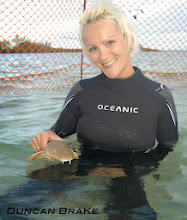
Our next adventure was a kayak and snorkel excursion at Deering Estate. The teachers kayaked out to a small island surround by sea grass beds. We filmed from a small boat and then explored the sea grass. Not a lot of life within the sea grass, which was surprising. We were expecting to see more fish and even some bonnethead sharks. The highlight was two land-based friends that we made before loading the kayaks and heading back to shore. Two raccoons had been busy and found a dry bag with blueberries in it. They had dragged the bag from a kayak and successfully opened it. The owner was happy that they had not eaten her license. Our guide said they have to lock the coolers because these little guys are quite precocious and can open anything. They showed no fear towards us and moved around the group and over the kayaks looking for more snacks. They even sniffed the camera to see if it was edible.
The next adventure was an airboat ride! Airboats are a really exhilarating way to explore the Everglades and the drivers are usually real characters that have spent a lot of time out in the wilderness. On the way to the park we stopped to film a canal along Alligator Alley. A gator moved towards the footbridge and had something in its mouth. As we tried to guess what the animal had been, its face rolled up to the surface; it was a dog. This was a little hard to stomach and we diverted the teachers away. Not that it isn’t science, but was a little more graphic than we were hoping to share. Another gator swam up and there was a bit of a struggle. This was made worse when later in the day we saw the same kind of dog walking along the edge of another canal. Not something I really want to film again.
The airboat ride was a blast and we even got to stand out in the saw grass. We needed to get shots of the boat passing so the whole film crew rolled up our pants and hopped in, trying not to sink up to our knees. Aside from the sharks I think this was the highlight for me. You are not really allowed to step out of the boat, so this was a real treat for us. When given the chance the teachers all jumped out as well. I was impressed with their sense of adventure.


Following the airboat we headed to Shark Valley for a tram tour to get a view of the different hammocks and animals within a different area of the Everglades. The two hour tram ride was tedious and our guide was unfortunately, not very interested in actually stopping to see anything. This was magnified when a turtle crossing the road nearly lost its life, but we did not even pause to check it out. We shouted from the back as we spouted turtles and numerous baby alligators, but it was to no avail. If you are planning a trip to Shark Valley, I would recommend renting a bike because you will see a lot more. The view from the tower at the halfway point is pretty impressive, but we were nearly left when we exceeded our 20 minute time limit. We had 2 pregnant teachers and the eight-mile walk home in the heat would have been brutal. Watch your clock because they will leave you! We all had a good laugh at the, “ non tour,” tour. We hoped off and walked the last quarter of a mile and saw several turtles, two baby alligators and some massive garfish.

Our final day was a return trip to Deering Estate. The kayak route was different and we snorkeled in an area with massive tree roots that were covered with mangrove snappers. We did not see any sharks, but it was an eerie and interesting place to explore. The halocline was very defined as fresh water mixed with salt coming out of the inlet. Really cool to see, but not ideal for filming snorkelers at the surface.
There was one surprise waiting for the teachers as they returned to the park; snake man. A local reptile guy was waiting with some invasive species to show the teachers just what critters are causing problems in the Everglades. Snake breeding areas were damaged during hurricanes and people also released pets. This has caused a massive influx of invasive species including Burmese pythons, African rock boas, iguanas and monitor lizards. Invasive species wipe out the indigenous animals and can cause a drastic shift in the ecosystem if left unchecked. Beautiful animals, but very destructive without any natural predators; a 16 foot python was found with an alligator in its stomach when dissected.

Although the heat was intense we survived without a massive thunderstorm and without looking like we got the chicken pox from mosquito bites. Such a magical place and really worth the trip whether you live in Florida or not.