Showing posts with label Duncan Brake. Show all posts

Sunday, December 9, 2012

From Florida to The Bahamas: Sharing Sharks with Students


As we anchored the boat just outside the entrance to the mangrove channel there was a lot of giggling and excitement on the boat. Fueled up with peanut butter and jelly sandwiches (official field work lunch) and chocolate cupcakes, the students were ready for adventure. Duncan and I, along with Jill, Michael and CJ from the Sharklab, were embarking on our epic day in the mangroves.

We warned the students and teachers about the bottom being a little squishy and to be mindful of sea urchins. We lead the charge and checked for critters as we made our way to the entrance. The four female students jumped off the boat, squealed a bit as their toes squished and sunk, but they giggled and charged on. The boys however, were a bit more reluctant. Everyone was en route and they were still on the boat. Finally, after a bit of heckling from their female classmates, the boys made the leap and followed us. They politely insisted, “ ladies first.” Nice to see such young gentlemen- ha!
As we neared the entrance we warned everyone about the center part getting pretty deep. This beautiful tunnel to paradise is about three feet wide and the mangrove branches wrap around it from top to bottom. This adds to the sense of adventure as you swim through like explorers charting a new path. As the water got deeper the giggles returned, but all made it through unscathed.


The tunnel pours into an opening in the mangroves that is truly paradise. This is by far, one of my favorite places in the world. It is wild, untouched and feels as thought you are on a different planet. The only reminder of civilization is the occasional plane passing overhead. It is here where we were going to share with the students and teachers, a beautiful moment with wild baby lemon sharks.


Sharklab manager Jill had made her way up to the spot and put some chum in the water. The baby lemon sharks head up the channel on the high tide to look for food and take shelter. The channel is a dead end, so we hoped that a few sharkies had ventured in and would come looking for a snack. Before too long, the tell tale wake on the surface indicated a shark heading our way. The kids immediately started imitating the, “ Jaws,” impending doom music. We all had a good laugh. The little sharks are always cautious, as you would be with a bunch of potential predators loitering about. Slowly, but surely they came to check us out. The first shark that approached had a green tag, showing it was one of the sharks currently involved in a Sharklab research project.

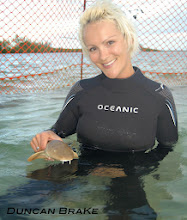
Finally the shark with the green tag came in for a snack. Word spread quickly and pretty soon we had five sharks cruising around. The excitement level rose as students anxiously waited for their turn to feed a shark. Fear and misunderstanding were replaced with laughter and a little competition to see who could feed the most. As their comfort level increased, the teachers decided to get in on the action. They each nudged their way to the front and shared a moment with the baby sharks. It is an amazing thing to witness people and sharks sharing a simple, but powerful encounter with the capacity to change a person’s entire perception. I watched, in awe, at the beauty of the moment. This is hope for our sharks and hope for our oceans. These little sharks are ambassadors for sharks all over Bimini and the world.


It was hard to say goodbye, but the tide changed and it was our time to go. Every student and teacher had a grin from ear to ear as we swam, stumbled and waded back to the boat. Everyone was glowing from such a unique experience, one most said they never expected to ever have, especially right in their own backyard. I can only hope that these students and their teachers will carry this experience with them and speak on behalf of sharks and how amazing they are.


The following day Duncan and I visited a group of students at the Louise McDonald High School on the north island of Bimini. We wanted to talk to the kids about sharks, their importance and the war built on greed and fear that is being waged against them globally. We also wanted to emphasize the standard for shark conservation Bimini is setting as part of the Bahamas Shark Sanctuary, Shark Free Marinas and a proposed Marine Protected Area. These students have a voice and they are a part of something that is making a difference for sharks. It is crucial for them to understand the value of the role they play and can continue to play on behalf of these amazing animals.


Earlier in the week we visited a group of first graders at the St Jerome school in Fort Lauderdale, Florida. My mom’s godson is seven, and like many 7-year-old boys, he has a healthy curiosity about sharks. We made arrangements to visit his class and it was a blast. First graders are one of my favorite ages to work with because they are excited, curious and manage to ask some pretty cool questions. They know more than one would expect, but so are so open to facts and positive information about sharks.

Whether is it high school students or first graders, the message is the same. Each one of us has a voice and the ability to help sharks. We can and should take action as a single part of something that impacts our entire planet. Without sharks there will be no oceans. Kids are the hope for sharks and the hope for our oceans.

Thank you to the St Jerome School, The Bimini Biological Field Station ( Sharklab) Ulf Marquardt, The Louise McDonald High School and Miss Lisa Wallace for making these incredible days a reality.

Tuesday, December 20, 2011

Filming, Fixing Cameras and Frolicking in Freo


Our expected six day stay in Perth and Fremantle has turned into almost 3 weeks. At first I did not mind a few extra days, as I am absolutely in love with this place, but now we are ready to go. Facing three months in Antarctica is exciting, but also intimidating because I’ve never been to that part of the world. Each day I mentally prepare for life on a boat and life in some raw and wild conditions; each day we stay on the dock and an emotional rollercoaster carries me.

The boat is prepped, problems have been solved and goodies have been purchased. There are certain snacks and treats that make the long duration of the shoot more bearable. We all have our creature comforts and mine include comfy pajama pants, party mix, some good books, Tim Tams and my journal. We will put in long days and many sleepless nights, so there are things that bring some sense of normalcy to the insane ride that awaits us. Monty, the world-wandering shark, is also ready for his first journey to such cold temperatures.

Duncan and I are familiar with the boat; she was our home for two and a half months this summer. We know how she moves and what life is like in such tight quarters. We also know most of the crew, which makes the transition to 24 hours a day with 8 other people a little easier. As we bring boxes in, the unpacking and stowing process gets a bit overwhelming. It is like Jenga and each piece has to move just right in order to not cause a catastrophic crumble of camera equipment, toiletries and wool socks. Creative storage has become an art form on the boat and we use every plastic bin or cardboard box for something. Large rubber maid bins are drawers and a cloth shoe rack becomes ideal for storing a vast array of items, shoes not included. We negotiate for additional space and fill every inch we acquire.


The office space for prep was stuffed with gear for the daunting and equipment intensive shoot. Sorting, stocking, stowing and double -checking that we have everything we need. Not easy to get a part when you are in the middle of the ocean and if you could find it, the price would be astronomical. Expecting all things to go wrong we prepare and bring the appropriate back ups to make sure we can continue to shoot no matter what. The climate and salt water will continuously attempt to destroy our equipment and break our stride.


Long johns, wool socks, beanies and multiple pairs of gloves will be our daily outfits; an interesting contrast to the flip-flops and tanks tops we are wearing in the summer heat of Australia. Difficult to wrap your head around the broad temperature spectrum we are going to encounter. I am not a fan of the cold, so I have enough gear for two people, as I am determined to not let Mother Nature break me. I don’t want to miss the raw wilderness and once in a life time moments because I am being a wimp and am too cold.

As Christmas nears, there are no fir trees decorated with lights or snow covering the fields. Santa is riding around on a bicycle and golden stars shimmer on telephone poles, with melting from heat more of a concern than freezing. It is surreal and bizarre to hear Christmas songs with the sun scorching down and the beaches stuffed with bronzed bodies. Sale signs hang in store windows and the streets of Freo are busy with shoppers. Koalas are hanging from stockings or wearing Santa hats and Santa was even seen riding a crocodile. Crikey! Apparently Dick (Dick Smith) does Christmas and Santa is super skinny, probably due to riding his bike in 90-degree summer heat.


Mullets seem to be all the rage and are only outdone by the rat-tail. The Mohawk mullet can also be seen quite commonly and not because the owner of said haircut lost a bet. If you are not familiar with mullets, they are a style of haircut in which the top portion is short (business) and the back is long (party). They come in all flavors and sometimes the fairly elusive female mullet is sighted. They can be curly, spiked and come in a variety of colors, all, glorious in their own right. Tank tops, reserved for body builders and red necks in the States, are quite fashionable among most of the male population here. Singlets, the Aussie term for tank tops, can be seen on boys and men, from all walks of life. Summer is extremely hot here and I say that as someone that spends summers in the Bahamas and Florida. Maybe the singlet is more function than fashion?

Living in a hotel means eating out three meals a day, so we have become foodies during our extended stay. It is not cheap to eat in Australia, so we have explored in order to find cheaper options. The Fremantle markets have an Asian food court and it is amazing. We have avoided the stall that keeps getting visits from the health and safety department, but touch wood; all other meal endeavors have left full bellies that have remained full. I found a veggie red Thai curry that was to die for and was only $9. The average sandwich, to give you an idea, is between $18.00 to $28.00 Australian dollars. Breakfast is also not for the faint of heart when speaking about price. Brekky with a coffee will cost you at least $16.00. Dinner, well I am not going there. You can imagine. A pint of beer is on average between $7 and $9.50. Mixed cocktails are about $16, so it is comparable to a night out in South Beach, although the atmosphere is far more amazing and drinks are not served with a large side of attitude. I know, I am a bit biased, but I am absolutely and unabashedly in love with Australia. Shhh….don’t tell Duncan.


Our base camp started at the Esplanade, before moving to Duncan’s family’s house. During prep for a shoot the hotel is simply a place to take a shower before crashing into your pillow from exhaustion. The jet leg, heat and long days are enough to break even the most whole-hearted efforts. The World Sailing Championships had just launched when we arrived and our hotel was stuffed with Team UK. The hotel and city have welcomed the event with open arms and have decorated with sails and sailboats to show this consorted effort. The streets are packed and the bay is filled with white sails from early morning until dusk.


The park across from the hotel was the heart of the event with tents filled with merchandise, nightly bands and performances and even a massive Ferris wheel. Much to our dismay we missed the INXS concert. Wow, they really do love the 80’s here. Awesome! Yet another reason to move here! The energy of the city is bustling with this major event and the nearing holiday season. Such a contrast from being in Miami, as far as the energy and movement of a city goes. People smile and there is a lot of laughter as you walk down the street. People are out enjoying the weather with friends and family, filling the days with cold pints of locally brewed beer and lovely strolls along the boardwalk. Drivers are friendly and I have not received the middle finger once, nor needed to give it. I didn’t even need to honk the horn!


The summer season also means lot of fresh fruit. For those who know me, my obsession with watermelon is pretty ridiculous, so I have eaten as much as I possibly can. Strawberries, nectarines, mangos and avocados, have all been incredible. Our mass consumption of fresh produce is also largely due to the fact that very quickly into our journey it will become a luxury and then disappear all together. I feel like the pulse of Perth is one of a city that is not quite sure what it wants to be, but offers a diverse range of options. Being the most Western big city in the world, Perth sits on a unique doorstep. World class dinning and wineries make it a foodie’s paradise. Gorgeous turquoise water draws kite boarders, surfers and sunbathers, while the clean air and ample open space is ideal for athletes of all persuasions. Not a day has passed where the designated paths have not been decorated with runners and cyclists.

We’ve spent some time with Duncan’s family; Steve, Sue and Michael live in Perth and have allowed us to spend a few of our extra days as boarders at their house. It is lovely to be with family as the holidays approach and being so far from our immediate families. Welcoming us with cold beer and a proper Aussie BBQ, a glorious way to spend a summer evening. We all had a good laugh as we said “goodbye,” numerous times as our departure date kept getting pushed back. It became a running joke whether we would actually leave or not and if they should start charging rent.


We moved our lives and ourselves onto the boat and prepared for the official and actual departure. Pulling off the dock was emotional; excitement, charged energy for filming and the rush of adventure, sad to leave Freo and family behind and nerves about the impending journey. It is one of those moments that you want to shout, cry and laugh all at the same time, but instead you just move around in a weird bubble. Here we go again, on what is sure to be one of the most exciting and challenging journeys of our lives. See you on the flip side.


Friday, October 28, 2011

Palmer Trinity Student Outreach


My hectic schedule does not allow me to get into classrooms as often as I would like, so when I get the chance it means the world to me. On October 27, I headed to Palmer Trinity School in Miami to speak to 5 classes of 6th graders. This is one of favorite ages to speak to because they are starting to question the reality of media, movie and Internet stories. They have a basic understanding of ocean ecosystems and can grasp the devastation that is caused by slaughtering sharks across the globe.


Living in Florida many of them have been lucky enough to see sharks and one of the students had been cage diving in South Africa. The excitement and energy is infections and always gives me new inspiration for projects, articles and programs.
When the students filter into the room, I love the, “ aw, yes! Sharks. I love sharks.” I know many of them have parents that fish and that have probably caught sharks. I hope that their excitement travels home and makes mom, dad or another family member think about their actions and if it is really worth it. I always remind them that even though they are young there are lots of things they can do to help the environment.


Many of them talked about watching shark documentaries including Sharkwater, snorkeling with their families, recycling and doing beach cleanups. It is reminder that whatever age, you can make a difference. Each person DOES count.

Thank you Dr. Naigle, Miss Winn and Palmer Trinity School for encouraging your students to think about the world around them and find ways to actively protect it.

Monday, October 10, 2011

Everglades Biology: Gator Bites and Bull Shark Noodling

When the alarm blared at 6 am I opened one eye feeling like death warmed over. The late arrival into Miami, the early wake up and the jet lag from being across the pond for 3 months had left me with the kind of exhaustion where you are beyond sleep. I asked myself why I scheduled this shoot? The reason: I love the crew and it involved bull sharks! Enough said. Plenty of time to sleep when you are dead, or so they say. Along with bull sharks the shoot was set to include alligators, a critter that I have no experience filming and was keen to get up close with. Yes, another animal with large teeth.

Phil and Kirk arrived to pick us up, camera gear was loaded and off we went in a half awake blur. We drove for an hour before arriving at our home away from home for the next four nights, a USGS houseboat. Yes, a houseboat. Upon arrival we sighted a literal “houseboat, “ television, barbeque and dinning room included-not our boat. Our boat however, was not as bad as it had been described. I was told people might sleep in a tent and that there was no shower. Upon further inspection the tent story was in fact true, but there was a shower. I will admit though, that I did not use it.


I hopped on the boat to give a hand moving our floating home to a dock where all the equipment could be loaded. Standing on the swim step I threw the stern line to Duncan. We secured the boat and as I hopped off Dunk asked me if I had seen the gator? No, I had not. I looked and saw a chubby reptile floating in the sun just behind the boat. Apparently my feet were about a foot away. Nice warning me Dunk! No worries, Willy (we later learned his name) is a bit of a regular and seemed to prefer scraps from the fish cleaning station to my little toes.


Shark gear, gator gear, enough food for an army, toilet paper and our camera stuff made its way to the boat and was temporarily stowed for the journey. Not a lot of space to work with and as soon as seven other people boarded, real estate would become a hot commodity. We bid farewell to Phil and set off on our eight-hour journey to Shark River. The houseboat does not really make way, but instead cruises and we wanted to make sure we could arrive to our destination and anchor with some daylight left.

It is always crucial to know the bathroom situation when you are on a vessel. Our home for the next four days had an incina-toilet. Yes, this toilet burns human waste. Kirk gave us the run down and we learned about the little cup that goes inside, flushing and the burning process. This is a delicate machine and by the morning of day two it was off limits except for emergencies. There are porta potties strategically placed around the study sight and they were visited a couple of times. The other option was finding a place to squat over the edge of the boat. I have no problem peeing off the back of a boat and find it easier than dealing with most heads on boats. As I backed over the edge for the first time all I could think about was my white bottom suspended like the chicken that I have seen at alligator and crocodile feeding shows. I imagined a massive beast cresting the water and snatching me off the back in silence. I decided a higher perch than the swim platform would be a good idea.

In our travel induced exhaustion Duncan and I managed to forget towels, pillows and only grabbed one fleece between us. Our first night we shared the bottom bunk at the back of the boat. There were four bunks; two cots, a tent and the galley table that folded into a bed. The AC was incredible and I woke up freezing, finding Dunk with his jacket over his legs and layers of clothing on that he had not gone to bed with. We shared Monty (my stuffed traveling shark) as a pillow and did not get much sleep. When the rest of the crew arrived we gave up our bunk and were moved to the honeymoon suite-AKA the kitchen table. After dinner we took the table off its stand and removed the stand. The tabletop sat on the two bench seats and voila, bed for two. We used our duffle bag as a pillow this time and managed to use the jacket and blanket to keep us warm. Next to us was a cot and Kirk in his bunk on the other side. Phil took the second cot down the hall, with Adam and Robin in the tent on the back deck. Pat and Mike took the bunks at the back and nine people enjoyed a slumber party on the boat. Going to bathroom at 3:00 am was like trying to navigate a minefield and resulted in a bumped head and stubbed toe. Ahhh, field research!

My previous experience with the Everglades involved an airboat, a guide with about five teeth wearing cutoff denim shorts and two Florida panthers. We were crammed onto the airboat with ten other tourists (I do not consider myself a tourist being that I live in Florida) and braced ourselves for the action. Our guide ripped around corners before stopping to inspect an alligator at the surface. Said gator immediately b lined for the boat just like Pavlov had rung his bell. The alligator played his role accordingly and posed for the, “snap, snap” of cameras. Our attention was drawn away when a woman asked the guide, “ is that a wild cat? ”

Before looking up I was thinking maybe there are feral cats out here –good luck as a gator appetizer. We all looked up and saw the dark feline on top of the dyke that runs through parts of the Everglades. This was no small kitty, but a Florida panther; often believed by many to be an urban legend. On cue as though ready for a National Geographic Serengeti run, the animal set off. I have been told that these animals require seventy square miles and only come together to mate. Knowing this, I was shocked as a second cat climbed up over the bank and moved along the dyke. No way was this happening. The guide radioed back to base and they all laughed. In seventeen years as a guide he had never seen a panther and his ear-to-ear grin showed off his five glorious teeth. When we returned the base we all recounted the tail to the others, so that his story would be validated. Digital cameras also helped, showing images to the doubters.

I was expecting this trip to the Everglades to be slightly different, being that our captain had all his teeth. Anytime you are going to be filming a new animal it is exciting and also a bit nerve wracking. When Duncan and I were doing a scout on the Rainbow River in central Florida we asked our colleague what to do if you encounter a gator? He said, “ you bump them just like a shark if they come around, but they usually don’t bother.” I have done my share of establishing my space to a large shark that is encroaching and do not think twice about it; the thought however, of doing this to a gator feels very uncomfortable. I feel like I have a strong understanding of how sharks move and behave, having spent thousands of hours in the water with them. Alligators are a whole new ball game.

This was set to be a busy trip with hefty ambitions to accomplish in three days. Funding for research can be difficult to secure, so it is necessary to make the most out of opportunities that allow for collaboration. The lab at Florida International University is exceptional at working together to benefit the various members in their different focus areas. The houseboat acted as a base for the researchers to work from with their designated small boats being launched everyday. Robin led the dolphin team. Pat, Mike, Duncan and myself we usually on the film boat. Phil and Adam shared the gator and shark boat because sharks are done during the day with gators being worked with after dark. The footage will be used for an interactive kiosk at the Museum of Discovery in Miami, Florida before national distribution. Very excited to be a part of another education program.

On our first day we ventured out with Robin to look for bottlenose dolphins. I have seen many wild dolphins, but never along the mangroves, using them as tools for foraging. We sighted several groups and Robin took photographs in order to visually identify them. She knows many of the dolphins and knows where they will be hanging out. The rest of the crew arrived later that evening. Dr. Mike Heithaus was there as host for an interactive video kiosk to be shown at the Museum of Discovery in Miami and eventually throughout the United States. His PhD candidates Phil and Adam were there working on their respective projects and Kirk was our captain, mechanic, engineer, gator catcher, shark wrangle and pretty much anything you need guy.


The bull shark work that is being done includes catching and tagging juveniles. They are found further up Shark River than the larger sharks, using the mangroves as a refuge. Sharks are cannibalistic and juveniles are not safe from adults, even those genetically related. The mangroves provide a nursery until they are large enough o survive in the open ocean. Bull sharks through the process of osmoregulation can tolerate brackish and fresh water. This process allows them to maintain an internal water concentration regardless of their environmental conditions. They have been found hundreds of miles up freshwater rivers and have gained more of a monster reputation for their presence in unexpected bodies of water.


The goal was to film a juvenile being released, but this was far easier said than done. Mangroves release tannic acid, which gives the water an iron yellowy brown color. The soft silt bottom is easily disturbed and the places with shallow clear water are often in the deep shade of the mangroves. One slight step to get the shark in the right spot and a cloud would rise. We would move as quickly as possible to avoid being overcome by the blob; more often than not we were defeated, sent back to our vessel in search of a new backdrop. We maneuvered, held sticks, stood on one leg, cursed a bit and went up to our armpits in dark water, but managed to get a few shots. That is one of the reasons I love filming nature though, there are always challenges that force you to get creative. It is nothing short of an adventure each time.


Snook behave better than bull sharks. I learned this as we joined Dr. Jen Rehage and her crew for some electro fishing up river. Electro fishing allows the team to capture many fish quickly and efficiently without having to hook them. The stunned fish are held in a large tank on the boat. They are measured and tagged (PIT tags that are inserted under the skin) before being released. We needed to get a release shot of a snook and this meant that I needed to go for a swim. Everyone staying high and dry had ideas about where I should film, but I wanted a place that I could stand and see bottom. The fish team knew a rocky spot that they thought would be perfect. I slipped on my Riffe cryptic blue camo wetsuit (not exactly camouflage in this environment) and lowered myself into the water. Mike asked if I want some white sharks in there with me. “ At least I would know what I am working with. I am good with great whites.” It’s the water moccasins that I was worried about, not gators or bull sharks.


To film the snook I needed someone in the water to do a release. Jen hoped in and received a fish from her crew. She is floated in open water, well not actually open, but she was not pinned against the mangroves like I was. We worked together to get some beautiful shots of our cooperative snook and I began to relax. Jen said they swim their all the time and she assumes her students will let her know if a gator is headed her way. I passed the camera back on the boat and took a mini swim. The water was lovely and I actually wanted to stay in a while. I was shocked at my new found sense of comfort, but I guess it all what you are use to.


Filming alligators was a bit easier than the bull sharks, although shooting at night always poses a series of challenges. The first being that it is dark out and in the Everglades there is absolutely no light pollution. Working on a white boat where people are shinning massive spotlights and all wearing headlamps, aside from causing temporary blindness, can create harsh hot spots and shadows. The two teams split up as the sun went down and headed down our respective routes with a rendezvous point at the end. Adam briefed us on how the events would play out and defined everyone’s roles. We wasted no time in spotting a pair of red eyes floating just above the surface. At that point I am contemplating horror stories about young adventurers being picked off one by one by an overgrown reptile lurking in the mangroves.

As we slowly approached our target everyone was quiet and Kirk sat poised on the bow ready to pounce like a cat. Snatching an alligator is no easy task, especially in the dark among snarled mangrove roots. In one quick move the snare was around the gator and the notorious death roll began. A second snare was placed around the gator’s mouth. Kirk and Adam lift the alligator into the boat and quickly secure the mouth shut with tape. Now this may sound a bit brutal, but it is for the protection of the animal as well as the crew. Of course this is not the most comfortable experience for the animal, but the knowledge that is gained will help alligators and other species that call the Everglades home, to survive and thrive. I asked if it was a male or a female and Kirk grinned, stating that Adam would let me figure that out later. Oh boy!


Being the comedian that I am, I decided to name our little gator Einstein because Adam said they do not usually catch the really savvy animals. When I finished getting my shots I took a moment to really look at Einstein. Gators, like sharks, get a bad rap. The detail in its skin is remarkable; each scoot placed perfectly. The skin is soft to touch and the belly is a beautiful cream color. The most incredible part was the eye; not the cold space I expected, but gentle, almost soft. I studied Einstein for a long time, figuring this might be the only chance I get to be this close to a wild alligator. Powerful remnants of a past existence on the planet, they really are an amazing feat of evolutionary engineering.


Back on the houseboat each gator was worked up just like a shark. They are measured, weighed, DNA and blood samples are taken and the sex is determined. Unlike sharks, there are no obvious external sex organs, so one must do some internal investigation. When the time arrived to determine whether Einstein was a lady or not, Adam rolled up his sleeve and asked if I was ready? Sure. He lifted the rear end of the animal and showed me the slit where the cloaca was. He instructed me to insert two fingers and to tell him what sex I think it is. Not something I get to do everyday, so in the name of science I went for it. The area was smooth, so I stated that it is a female. Winner! Adam was so excited that I expected a gold star for my deduction. Einstein is a little lady.

The next gator is maneuvered for it’s workup and I am called upon once again to determine the sex. I insisted that Duncan might want to have a go, as it is something everyone should experience once. I got the, “ no way in Hell,” look from Dunk and role my sleeve up. He has just gotten back from the other boat making a last check for gators nearby our base and was not expecting to walk in on his fiancé with her hand up a gator. I reached in this time and my fingers met an obstruction. As I removed my fingers the penis followed and the gator proceeded to pee on my hand. Excellent. We didn’t even have dinner, Hell I didn’t even know his name. I will not describe the comments and jokes that followed, but allow you to use your imagination. Needless to say there was no shortage and they continued for the rest of the trip.

The last day we set off early to make our way back to port. A leisurely cruise, as the gorgeous Everglades slipped away and the ocean landscape took over. Back at the port I moved to a place on the dock where four or five people had gathered and were pointing. There were four manatees in the marina including a very small calf, nuzzling next to its mother. As I watch the mother and calf, a large manatee surfaced right below me. That walrus nose peaked into the air and the massive scars on its back shone white. Such a gentle creature and a beautiful moment tainted with the ever-present reminder of human destruction.

Burning poop, alligator cloacae, dark and scary water, electrocuted fish and a giant slumber party, pretty much sums up this adventure and I can’t wait to do it again.


Saturday, May 7, 2011

Diving In My Own Backyard: Coral Colds

Most of my diving is done in different countries, as I travel the globe to film. I am not complaining, but I had forgotten how much I love diving right in my own backyard.
I have not spent much time in the water in South Florida since 2007. It was then that I was working as an instructor and loved exploring the endless artificial reefs that this part of the world is known for. My favorite was Aqua Zoo, a site where I made friends with Baby, an 8 foot green moray eel with a dislocated jaw and even did a magazine photo shoot with her. Bull sharks, nurse sharks, massive schools of Atlantic spade fish, ancient barracudas guarding their thrones and midnight parrot fish sleeping upside down, nestled into the dark nooks and crannies of a sunken ship-all some of my favorite things and all things that I have neglected for several years.

When the chance came to dive and film in the Keys I jumped at it. The shoot was for a high school biology video series called “ That’s Amazing,” with Dr. Mike Heithaus as host. It is estimated that 30 million students will view the series within the next 6 years. I absolutely love working on outreach and education projects, so this was an exciting opportunity.It also meant working with Pat Greene of Symbio Studies again.Breaking south from the city chaos, the Florida Keys are the closest to island paradise that one can find in the continental United States. Thatched roof bars, sunset ales and marine protected areas teaming with fish-always a good time.


I was sitting in the Atlanta airport with 25 hours of travel behind me and another 4 to go when a glorious epiphany struck. We were set to arrive late on the evening of the 3rd and I thought that the shoot was on the 4th. I figured one day would not kill us and that we could sleep the day after. We had made the plan to get the rental car at the airport, swing by the apartment and make the drive to Key Largo that night. This would have had us arriving at our destinations sometime around 2 am. It’s always good to go diving in a jet lagged, sleep deprived state reminiscent to a zombie, right? Ah well time to sleep when we are dead. Aforementioned epiphany hit me like a bolt of lightening and was almost like Christmas morning. I was off a day because we had crossed the international dateline. We were arriving on the 2nd, the same day we left and would not have to get the car until the following afternoon. AMAZING.

I crumbled into my bed and disappeared into 12 hours of sleep. I never do that, but wow, it was incredible. Feeling remotely human again we loaded the camera and dive equipment into our Mazda 6 (sweet little upgrade on the rental car because they did not have any economy cars) and headed south. We met the crew and enjoyed a meal under a thatched roof in the cool evening breeze and made our dive plan.

Our dive started at 7:00 AM the next morning with the goal of exploring 2-3 sites and collect fish and coral samples for Dr. Rebecca Vega and Dr. Deron Burkepile of Florida International University. Our first site was about 60 ft and involved catching reef fish. As soon as I put my face in the water I could see the bottom. Yes, good visibility for filming. In order to catch fish a net is placed and smaller hand nets are used to corral fish towards the larger one. Dr Mike Heithaus zipped around catching the first fish he went after, making it look like a piece of cake. While pushing around the bus, also know as the Gates underwater housing with camera inside, I was wishing I had worn my freediving fins for a bit more propulsion. This was nothing short of a vigorous activity to shoot.


The next dive was a shallow reef covered with life. The goal was to collect mucus from corals to analyze at the lab and compare to the bacteria found in the mouths of the reef fish. As soon as I slipped into the sea a 4-foot nurse shark cruised past. Schools of French grunts decorated massive sea fans and squirrel fish peaked out from caves carved into the reef. Healthy brain corals and were home to Christmas tree worms and flamingo tongues found perfect positions on purple sea fans. These articulately decorated critters were some of my first subjects in underwater imaging. Searching for these tiny treasures was already one of my favorite parts of diving. Mega fauna are easy to spot, but sometimes the mini rulers of the reef can be more exciting.


With the samples collected the crew would need to head back to the lab. That was a wrap for our dive day. I hated to leave to perfect conditions of prolific life on the reef. In a day where there is little good news about our oceans and the battles they face, it is nice to see a healthy space that will continue to be protected.

Sunday, October 18, 2009

Shark Free Marinas

The Shark Free Marina Initiative is taking action across the globe and Oceanicallstars is very active in the campaign.


Check out the work we have been doing with marinas in the Bahamas.

Member Campaign

Shark Free Marinas Blog


Deeper Blue Article